
Editing your edits
The gift of a second chance

Dear friends,
I am writing this late on Thursday night. I’d miscalculated how long PowerPoint slides would take to assemble — I know I’m not alone in such miscalculations — and so time has been unkind as the week has slid by.
Also, I’ve handed in the manuscript for a new book of poems (it’ll be out in a year), and that is always when I realise what I should have done with a particular poem. As soon as the book was sent off, I began to see the edits that should have been completed. Perhaps it’s the recognition of another set of eyes. Or something akin to buyer’s remorse — in this case, given the amount of edits a poetry manuscript undergoes, it’s a remorse that comes with a remedy (thanks to very patient editors).
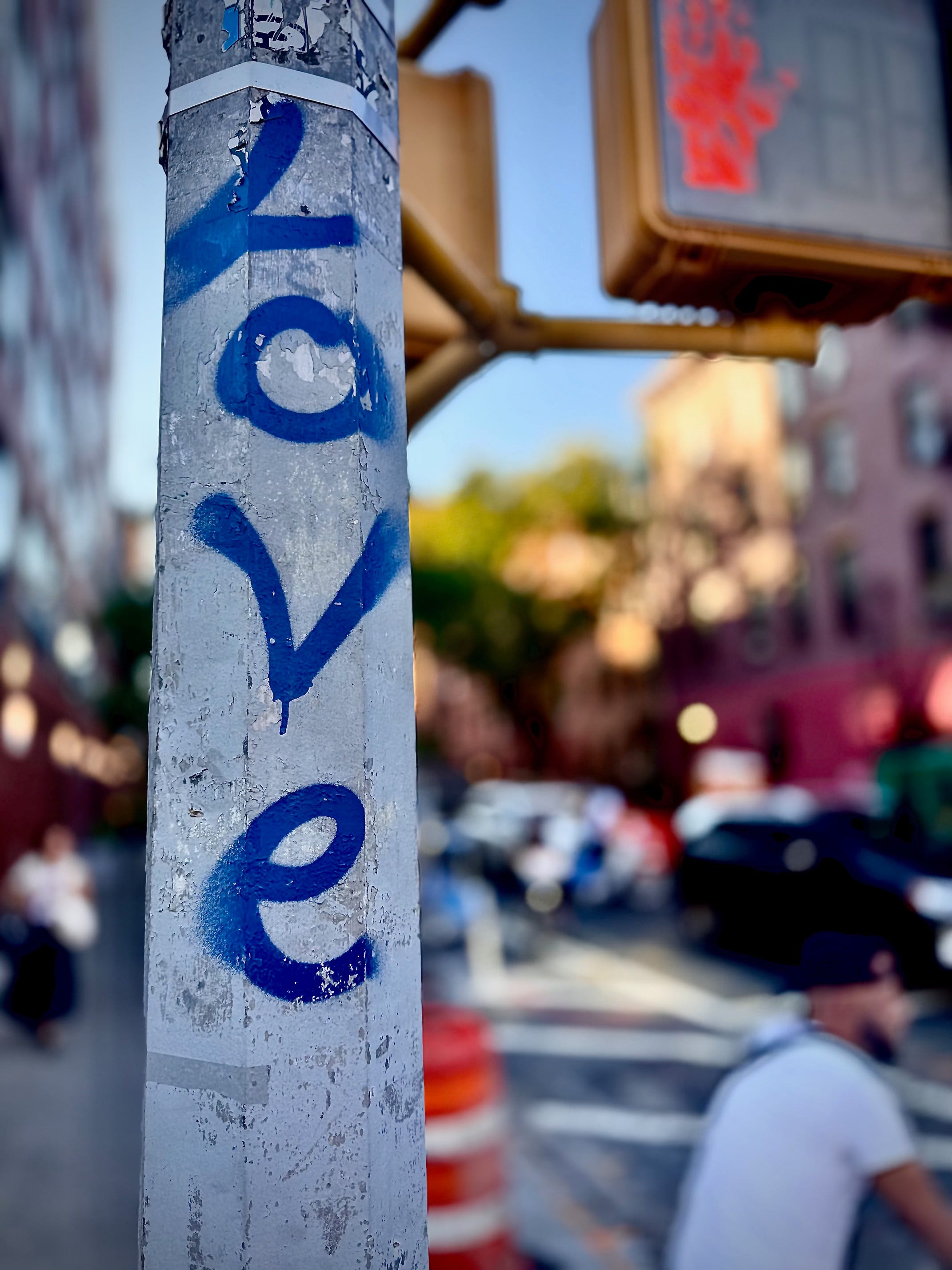
This is what I wanted to talk about this week: Editing.
Sometimes a poem arrives in a flash and — apart from minor changes — survives to the page in an almost-recognisable form. Other times, the final version is so different than the primary one that it seems like a different poem. The form is modified, as are the line breaks; the original major idea slunk away while a surprising line takes centre stage. One time I mentioned to Marie Howe that I wasn’t writing, rather I was just editing, and she said something like “Oh but that’s the real writing.” I loved her reformulation, as I have always enjoyed the power that a brutal edit can wield over a poem. Faithless and sure, the scalpel edit can reveal what was there all along.
I have a number of fairly basic edits that I begin with on my poems (or on those someone sends to me). I’m usually interested in making it shorter and in removing anything that looks like an intro/scene-setting or a summative stanza. Even though I occasionally re-insert them, I do like removing all adjectives and adverbs, and — importantly — I want to tone down any ways in which I think the poem is too sure of itself. There needs to be a yearning in the poem, I think, a need. I need some silence (insomnia and early mornings help) to tune into the original hunger from which the poem arose. Sometimes it’s a desire to say something I haven’t said before. Other times it’s the joy of letting language and form intermingle in shapes on a page.
I sent a poem to the fantastic poet (and ruthless editor) Spencer Reece once. He said “I love it. Get rid of the first part.” Just like that. Boom. Boom. The first sentence kissed where the second cut.
So here’s part of it. Once upon a time, the poem — a persona poem in the voice of a literary character estranged from his brother — ended like this:
I took a flight and hung around the areas where we used to meet.
I loitered with intent. I was hungry with hope but couldn’t eat alone.
I missed the home your body was, even though we’re grown now,
I missed your smell, your wrestle, your snoring breath.

And when I saw you, I saw you’d changed too. So much behind us we didn’t need
to name. I touched your arm. You wrapped it round me. Brothers again.
Then it got edited and ended like this:
I took a flight and hung around the areas where we used to meet.
I loitered with intent. I was hungry with hope but couldn’t eat alone.
I missed the home your body was, even though we’re grown now,
I missed your smell, your wrestle, your snoring breath.

And when I saw you, I saw you’d changed too.
So much behind us we didn’t need to name.
Then I sent it off, which helped me realise I wanted to shorten it again.
I missed your body, your smell, your wrestle,
your snoring breath. I took a flight and hung around
where we used to meet. I couldn’t eat.

And when I saw you, I saw you’d changed too.

So much behind us we didn’t need to name.
Each edit is trying to return to the emptiness from which the poem came.
Editing a poem is a joy — it’s possible to write and re-write what’s on a page. In person, editing is sometimes impossible. “I didn’t mean to say” is often meant, but what’s been said is not easily forgotten.
This week, whether in person or in a poem, I am interested in learning: How do you edit — or wish you could edit — yourself?
I’ll see you in the edits, friends.
PS: Throughout the fall, Blue Flower Arts is hosting a series of digital workshops with a stellar set of writers — Keetje Kuipers, Safia Elhillo, Chen Chen, Mahogany L. Browne, and Haleh Liza Gafori. You can sign up and purchase access to any of them here.
PPS: My good friend Marie Howe is teaching a workshop in Asheville, NC, called “Out of the Depths: Writing Prayer”. The workshop is from May 4–8, 2026, and registration closes on December 7, 2025. You can find all the details here.
Poetry in the World
A list of my events: Online and in the US (Manhattan and Kingston, NY; Princeton, NJ; Swarthmore, PA; Atlanta, GA; Cleveland, OH; Portland, OR; North Kingstown, RI; Chicago, IL; Cambridge and Stockbridge, MA; Notre Dame, IN) and the UK (Iona, Scotland)
September 30, Manhattan, New York, and Online
Join me and 2025 Jackson Poetry Prize winner Cyrus Cassels for a reading and discussion at 7 p.m. The livestream is free, and you can buy a ticket (which comes with a book) or sign up for streaming access here.
October 9, Princeton, New Jersey
Come find me at The Farminary at 8 p.m. for a reading and book signing. You can buy tickets here.
October 10, Swarthmore, Pennsylvania
I’ll be discussing “Poetry and Openness” with Megan McFayden-Mungall, Isadora Caldas, and Vivian Ojo at the 2025 Annual Conference of the Peace and Justice Studies Association at Swarthmore College. You can purchase tickets for the conference here.
October 12–18, Online
I’ll be participating in the 2025 Collective Trauma Summit. Registration for the free digital conference can be found here.
October 15, Manhattan, New York
Join me for a lecture alongside Episcopal Bishop Marianne Budde at St. Thomas Church. You can register for this free event here.
October 18, Atlanta, Georgia
I’m leading a retreat day called “Poetry, Prayer, and Place” at The Cathedral of St. Philip. Learn more about the retreat and register here. Tickets at reduced rates are available.
October 20, Online
Poet Philip Metres and I are having a virtual interactive session as part of the Catholic Nonviolence Initiative Series at 7 p.m ET. You can register for this free digital event here.
November 6, Cleveland, Ohio
I’ll be visiting Case Western Reserve University to have a conversation with Michele Tracy Berger. Registration details can be found here.
November 8, Portland, Oregon
Come say hello to me at the Portland Book Festival. For pass information and the complete author lineup, check out the festival’s website.
November 14, North Kingstown, Rhode Island
Together with Sophie Cabot Black, I’ll be reading as part of Spencer Reece’s “14 Gold Street Series”. Turn up — it’s free, it’s at 5:30 p.m., and the location is here.
December 1, Cambridge, Massachusetts
I’m delighted to be reading with Martín Espada at the Blacksmith House Poetry Series at 8 p.m. Admission is $5 and can be paid at the door; you can find more info here.
December 5–7, Manhattan, New York
I’m thrilled to be part of the Irish Poetry Festival at the Irish Arts Center; I’ll be doing two events: one paid and one free. Tickets and full details here.
December 11, Chicago, Illinois
I’m honored to be reading alongside E. Ethelbert Miller at the 27th Annual Peace Concert. Learn more about the free event and get a ticket here.
December 19–21, Stockbridge, Massachusetts
I’m leading a retreat called “Poetry of Peace” at the Kripalu Center for Yoga & Health. More details and registration here.
February 26–March 1, Kingston, New York
I’m leading a weekend retreat workshop called “Poems of Longing”. For booking information and more about the program, visit the Hutton Brickyards website.
April 23, Notre Dame, Indiana
I’ll be giving the keynote for a symposium at the Raclin Murphy Museum of Art. Event details here.
June 27–July 3, 2026, Iona, Scotland
Krista and I will be leading a week of conversation (with some musical guests) on Iona, an island off an island off the west coast of Scotland. The Saint Columba hotel will be releasing information about it soon; sign up to that list here.
I’m actually learning to how do the opposite of editing myself as I realise I’ve spent most of my life censoring all those parts of myself I thought nobody wanted to see or hear. It’s a liberating process and brings to mind this quote by Buckminster Fuller: “I know that I am not a category, I am not a thing - a noun. I seem to be a verb, an evolutionary process, an integral function of the universe…”
I agree that the real writing happens in the editing. It’s my favorite part of writing poetry because it gives me the opportunity to know the poem on a deeper more intimate level. I go line by line and ask myself, does this serve the poem? If not- cut. Does this line do more than one job? No? Revise. Are there filler words that can be cut? Where does the Volta make the biggest impact? Is this form working? Where’s the surprise, the unexpected? None? - throw it in the trash bin! (Kidding- I keep every version- my little darling words too precious to ever discard 😎) The hardest question for me is whether or not the poem is finished. They never seem finished- like me- thank goodness.