
Some words about change
and the changes change contains

Dear friends,
Your pantoums last week were glorious. I should write a a 256-line pantoum, 16x16, about the experience of reading them. Thank you — for responding with such generosity and for engaging with each other with such generosity.
A few days ago, we released an episode of Poetry Unbound in Conversation where I interviewed the Palestinian American poet Fady Joudah (who is also a medical doctor). The conversation happened when he was presented the 2024 Jackson Poetry Prize in front of an audience in New York, hosted by the very good people of Poets & Writers magazine. What he says is poetic, personal, political, and powerful, and I urge you to listen.
A term I’ve written about a lot is “volta” — which means “turn” in Italian and from which we get the words “revolve” or “revolution”. In a poem, it’s where a turn occurs: everything is going one way, and then it turns. So much art, whether it be a film, a book, a poem, a suite of music, builds on the volta, where an expectation is established only for it to head in a different direction.
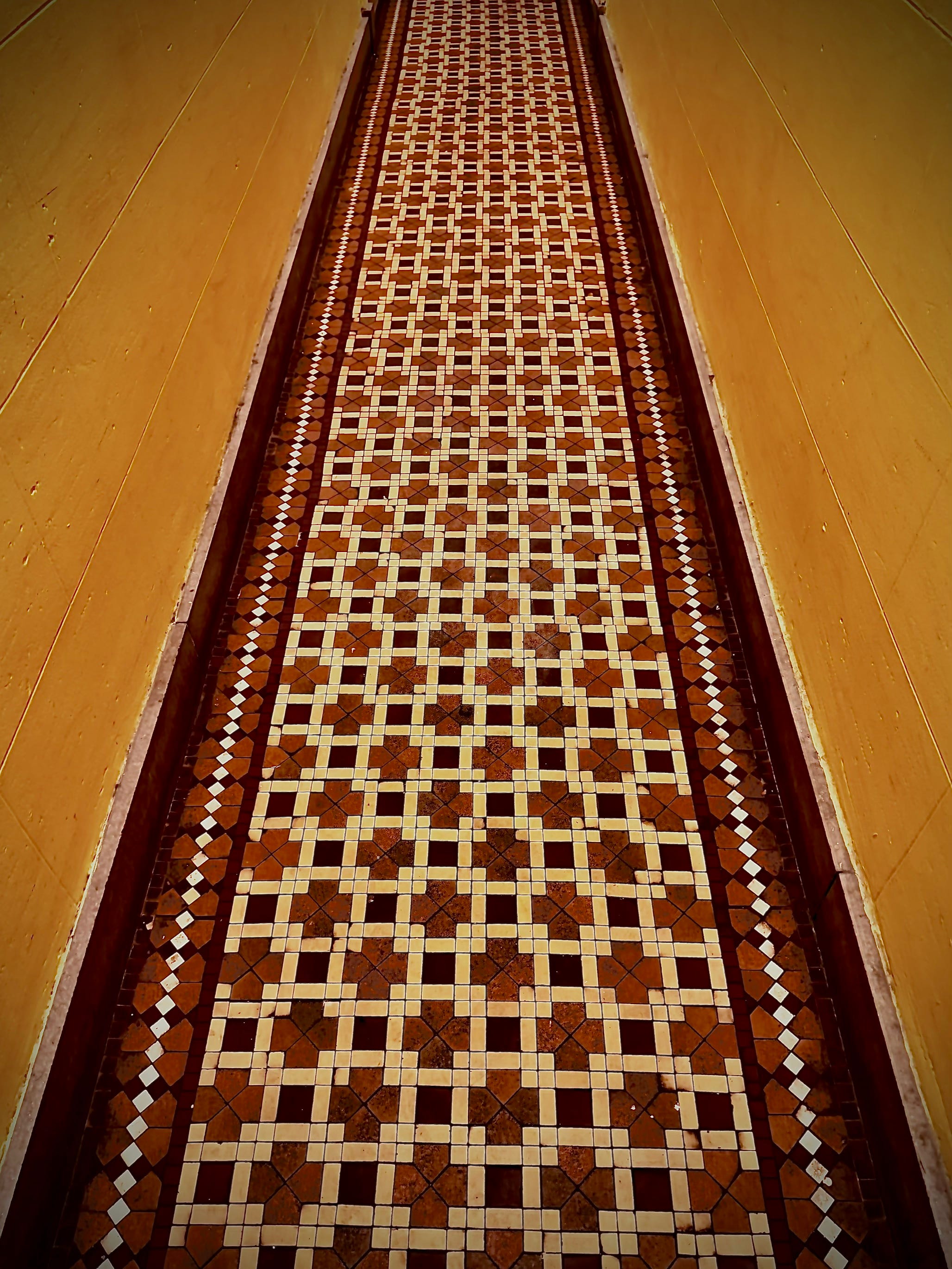
Here’s a poem I published recently. There was a grief I’d been trying to write about and when — finally — the pathway to write about it arrived, it arrived because I knew that it was only the doorway to another poem.
Our Lady of the Garden

i.m. Paula Merwin

All this time, I felt like I had to describe
 the things I did, and what was done to me,
 how I had to wander a strange world for years,
 needing to be busy, sleeping in strange beds,
 searching through cities for chapels to weep in,
 learning the stitches that keep a ripped heart
 together for a while, when what I really need
 to say is that it rained all night and morning,
 and the drops were a percussion on the trees,
 and after the sun rose, I saw an insect land on the railing
 and take shelter, and a bird drank from a leaf.
 Wild pigs exploded from the bushes where they’d hid,
 and the sage in the bowl smelt of memory and musk.
 A toad sat — still as any god — on the wet stone.
Originally published on Poem-A-Day; in my forthcoming collection Love Between Men
At the heart of the volta is change. And even with an anticipated change, like when sorrow gives way to something else, there can be resistance: I can miss the sorrow I said I wanted to move on from. We know this in griefs of our lives too. And one of the things from my training in conflict resolution was how some parties to a conflict can upset the possibility of resolution just before it’s achieved, because they cannot bear to imagine a life without the conflict they’re in (this is especially true for situations where we have been complicit in creating the conflict). A poem is a little vessel that can explore change, and as such, it can worm its way into the ambivalent hearts of humanity. To study our relationship to change is to study our relationship to living, I think. It reveals the politics and particulars of our differing lives.
So, that’s the question this week, friends: When have you resisted change? What happened then? What helped in your resistance, or did your resistance give way to something else? And if it did, what happened to your resistance? Was that an avenue of relief? Or grief? Or something else?
I look forward to reading your stories of change and resistance.
PS: For those of you in the Chicago area — or those who live elsewhere and enjoy taking online tours of art museums — I was thrilled to contribute, alongside Marielle Epstein and others, a few reflections to the Art Institute of Chicago’s permanent exhibition. You can ask for the audio tour when you visit, or you can watch and listen to the full tour here.
The Latest from Poetry Unbound
You can also listen at poetryunbound.org or wherever podcasts are found.
Poetry in the World
A list of my events: Online and in the U.S. (Rhinebeck, NY; Santa Fe, NM) , Ireland (Borris), Scotland (Iona), and England (Kettering)
May 31–June 5, Rhinebeck, New York
I’m leading a six-day workshop at the Omega Institute. We’ll read and examine poems and also write and discuss our own. I’d love to see you there. (For more info, click on the date heading.) And if you can’t join it, you might enjoy Orion’s Environmental Writers’ Workshop, taught by a team that includes past Poetry Unbound poet Michael Kleber-Diggs. Learn more about the Environmental Writers’ Workshop — which takes place at Omega from June 14–19 — here.
I’ll be joined by brilliant journalist Olivia O’Leary for a reading and conversation on my new book of poems, beginning at 3:45 p.m. (For registration info, click on the date heading.)
June 27–July 3, Iona, Scotland
Krista and I will be leading a week of conversation (with some musical guests) on Iona, an island off an island off the west coast of Scotland. It is filled, but if you want to be on the wait list, you can email the Saint Columba hotel by clicking on the title just above here. (For more info, click on the date heading.)
August 9–13, Santa Fe, New Mexico
I’m leading a four-day intensive workshop at Modern Elder Academy called “Poetry as a Common Language”. We’ll read, write, and discuss poems on finding and deepening connection. (For more information, click on the date heading.)
August 27-30, Kettering, England
I’m absolutely delighted to be returning to this year’s Greenbelt Festival, a gathering of arts, activism, and belief in England, beginniing. (For registration info, click on the date heading.)
I’ll be leading evening worship alongside Nadia Bolz-Weber and Doug Gay as part of the Festival of Preaching, beginning at 5:30 p.m. (For registration info, click on the date heading.)
I’ll be leading a virtual craft intensive on poetry and desire through Poets House, beginning at 6 p.m. ET. (For more info, click on the date heading.)
The Quiet Tug-of-War
There was a year I refused
to let go of the past's grip.
Its fingers, bruised and brittle,
curled tight around my spine,
kept me tethered to a version
of myself that no longer fit.
I told myself change was surrender,
as though my defiance were armor.
Burned bridges became monuments—
silent, smoldering reminders
that standing still is easier
than walking into the unknown.
In my sixth sober year, I saw it:
How resistance isn't strength,
just a clenched jaw caving inward,
fighting tides that gift their release
when you finally uncurl, exhale.
Relief came soft as wet earth,
a different kind of gravity,
less like loss, more like choosing
to pack light for the journey forward.
Oh, these lines… “All this time, I felt like I had to describe / the things I did, and what was done to me” - a whole lifetime in there...
For so long, I resisted the changes that becoming a mother wanted – needed - to make in me for me to become the person my children needed. I kicked against all its demands – no time to myself, no time to sleep, no patience, no patience, no patience. The constant draining physicality of caring for babies, of being “touched out” at the end of a day and craving five minutes where nobody would pull on me. But ironically – in the way these things happen - it was my youngest child’s constant kicking against me – and herself, and the world – that finally opened my eyes to what I actually needed to do, which was to stop fighting it all of it and just be with it. Whenever she had yet another meltdown, I would hold her tightly, as she pushed and pushed against me until suddenly, she would just collapse, like soft butter in my arms. I realised that by holding steady in the face of her resistance instead of feeding it with my own, I gave that resistance nowhere to go and it would just dissolve, both of us finding some blessed peace and release, if only for a while. I have carried this lesson with me in the decades that have followed, learning and re-learning it as life has thrown other change challenges in my path. And I keep a copy of this painting by the English artist Jenny Saville, as a reminder that whatever I feed grows and that “giving in” is not always defeat but may actually be the saving of me... https://www.artforum.com/events/jenny-saville-4-195996/