
Taking stock
Lent and Ramadan

Dear friends,
A friend of mine once said that she was “religious, but not spiritual”, playing on idea of the opposite (“spiritual, but not religious”). I don’t know how I’d state it for me — neither and both at the same time, but I do know that there are certain days of the year I like to make religious observances.
This week was one of them: Ash Wednesday, the beginning of the annual time of Lent (a word that comes from the Latin for spring), a six-week season of fasting, prayer, and almsgiving among many of the Christianities of the world. I went to a parish around the corner from me in Hell’s Kitchen on Wednesday at 4:30 p.m. and sat in the pew for 20 minutes. The priest was a no-nonsense New Yorker — here’s some ideas for prayer; here’s some ideas for giving to the poor; here’s some ways for the moral life. I wouldn’t say he was warm, but I would say that he was a man attuned to practice and action.
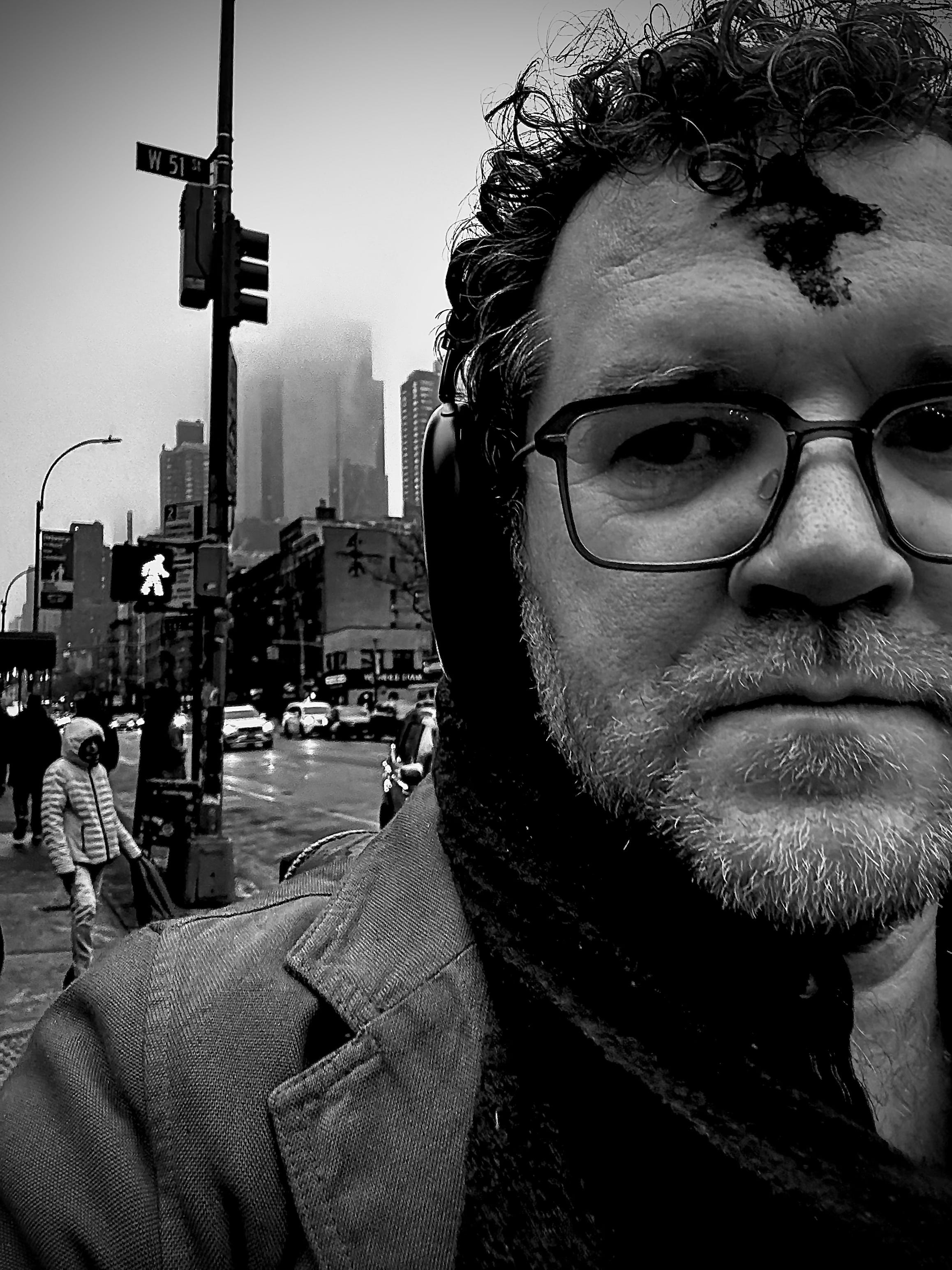
I went, then, to see a friend and then onto a book launch (for R.A. Villanueva’s gorgeous new book, A Holy Dread), with ashes on my head. “Remember that you are dust and to dust you will return” is one of the incantations said when ashes are put on your forehead: a taste of the sober truth we all know and will know at different stages throughout our lives.
I can think of a few people I wish would wear ashes on their forehead. The Babylonian king Gilgamesh saw himself as invincible and was so arrogant he thought he owned every woman of Babylon. He terrorised his own people, and when, eventually, the gods heard the cries of the people, they taught Gilgamesh a lesson.
The lesson? It wasn’t a cut-down takedown. Instead, they sentenced him to have a friend, followed by grief, and then — finally and in a way that seemed to fundamentally petrify Gilgamesh — he had to face his own fear of death. He who thought he’d live forever found himself in the grip of time, embodying the very fear he’d previously been spreading around. The story of Gilgamesh, which is so old, is revealing; we have been wondering how to live under the reign of leaders who think they’re eternal for a very long time.
This brings Ilya Kaminsky’s poem “We Lived Happily During the War” to mind too (we made a Poetry Unbound episode about this a few years ago).
We Lived Happily During the War

And when they bombed other people’s houses, we

protested
but not enough, we opposed them but not

enough. I was
in my bed, around my bed America

was falling: invisible house by invisible house by invisible house.

I took a chair outside and watched the sun.

In the sixth month
of a disastrous reign in the house of money

in the street of money in the city of money in the country of money,
our great country of money, we (forgive us)

lived happily during the war.
Deaf Republic by Ilya Kaminsky (Graywolf Press, 2019)
What I admire so much in his poem is that it asks questions of personal responsibility too. I do not know how to end wars or to change government tactics or to make big civic change. But just because I don’t know how to do those things, it doesn’t mean I shouldn’t ask myself the questions of complicity. Seasons like Lent and Ramadan — and many other seasons, secular and religious — ask us to take sombre views of ourselves, ask us how we help, what we do with our money, what we give our attention to, and how we act.
My question today is: What do you do to take sombre stock of yourself? I will look forward to hearing. For me, sometimes, it’s by asking john a. powell’s questions of myself: Who decides? who wins? who pays?
Our episodes this week are ones of taking stock: Sanah Ahsan brings us into culture and celebration and eros and creativity in their gorgeous “Ramadan’s Greetings” poem; and Rachel Mann invites attention to language, directionality of power, exhaustion, and demand in “#TDOR”. I’ll look forward to hearing how you take stock.
The Latest from Poetry Unbound
Episode 11: Sanah Ahsan — Ramadan’s Greetings
Episode 12: Rachel Mann — #TDOR
You can also listen on Spotify, poetryunbound.org, or wherever podcasts are found.
Poetry in the World
A list of my events: Online and in the US (Orlando, FL; Kingston, Manhattan, and Rhinebeck, NY; Memphis, TN; Notre Dame, IN; Santa Fe, NM) and Scotland (Glasgow, Iona)
I’m giving a keynote address at Training Magazine’s annual exposition. (For more info, click on the date heading.)
February 26–March 1, Kingston, New York
I’m leading a weekend retreat workshop called “Poems of Longing”. (For more info, click on the date heading.)
Join me at the University of Glasgow Campus Bookshop for a reading and conversation, beginning at 6:30 p.m. (For more information, click on the date heading.)
Peter Constantine, Joseph O. Legaspi, Daniel Simon, and myself will be reading to celebrate 100 years of World Literature Today, hosted by McNally Jackson Seaport, beginning at 7 p.m. (For more information, click on the date heading.)
March 25–26, Memphis, Tennessee, and Online
I’m delighted to be returning to Cavalry Episcopal Church for this year’s Lenten Preaching Series. My good friend Marie Howe and I will be in conversation at 6:15 p.m. on March 25, and then I’ll give a talk the next afternoon. (For more information, click on the date heading.)
I’ll be giving the keynote for a symposium at the Raclin Murphy Museum of Art. (For more info, click on the date heading.)
May 31–June 5, Rhinebeck, New York
This spring, I’m leading a six-day workshop at the Omega Institute. We’ll read and examine poems and also write and discuss our own. I’d love to see you there. (For more info, click on the date heading.)
June 27–July 3, Iona, Scotland
Krista and I will be leading a week of conversation (with some musical guests) on Iona, an island off an island off the west coast of Scotland. It is filled, but if you want to be on a waiting list, you can email the Saint Columba hotel by clicking on the title just above here. (For more info, click on the date heading.)
August 9–13, Santa Fe, New Mexico
I’m leading a four-day intensive workshop at Modern Elder Academy called “Poetry as a Common Language”. We’ll read, write, and discuss poems on finding and deepening connection. (For more information, click on the date heading.)
I am learning that my aging body helps me take stock of myself. I also realize that I have been afforded a certain luxury to mull over life. This process of taking stock often occurs, somewhat unexpectedly, through the rhythm and rituals of my life — a quiet morning with a cup of coffee in hand, reading, breaking open a book with others, taking daily walks around my neighborhood, engaged in online courses, writing lots of letters these days to my congressperson, standing with others (at a vigil or protest) to promote the common good in our country, Sunday morning Substack with Pàdraig, listening to music, hearing birds outside, appreciating a blue sky, watching a movie, writing poetry, potluck dinners with longtime friends, conversations which intentionally go beyond the superficial, enjoying one-on-one time with a good friend, laughing with my four year old grandson and eight year old granddaughter, trying to deal with life’s struggles and losses, falling into silence and solitude. These ‘practices’ help me to get a glimpse into myself and evoke a deep feeling of gratitude for life and love.
I pull out the quote below from the writer and management consultant Margaret Wheatley from time to time, as a way to gently probe my assumptions and beliefs. It is really important to me to remain open to changing my mind and taking new perspectives on board, especially as there can be a tendency to hold onto our existing positions as we get older, as a source of security and comfort.
“If what you say surprises me, I must have been assuming something else was true. If what you say disturbs me, I must believe something contrary to you…When I hear myself saying ‘How could anyone believe something like that?’, a light comes on for me to see my own beliefs…If I can see my beliefs and assumptions, I can decide whether I still value them.”
The quote is from her book “Turning to One Another: Simple Conversations to Restore Hope to the Future”, which she summed up in the declaration: “I believe we can change the world if we start listening to one another again.” Yes…
https://margaretwheatley.com/books/turning-to-one-another/